Content:
Aftermarket leadership means treating spare parts pricing as a managed capability, not a by-product of machine sales. At PARTS SUMMIT 2026 in Frankfurt on 15 October, leaders from Siemens Energy, Terex, CLAAS and Mitsubishi Electric Europe showed how they set, defend and review prices using market evidence, shared pricing and sales models, and continuous feedback.
Santiago Velez's words summed up the mood of PARTS SUMMIT 2026. For decades, spare parts were treated as a by-product of selling machines. The manufacturers who joined us from across Europe came to change that.
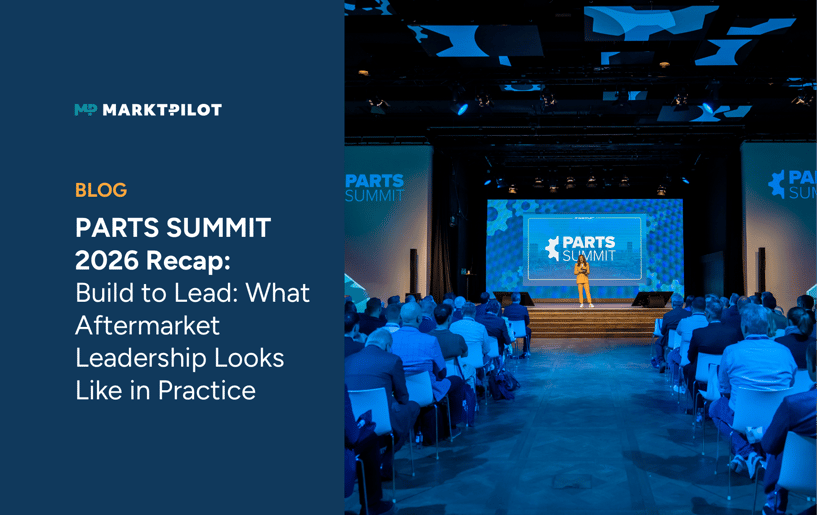
On 15 October 2026, over 200 aftermarket, service and pricing leaders from all over Europe came together at the Palais Frankfurt for the fourth edition of PARTS SUMMIT. Whether their business is energy, agricultural machinery, materials processing, factory automation, packaging, intralogistics, compressors, cranes or the automotive aftermarket, they shared one question: what does it take to lead in the aftermarket, not just earn from it? The day's theme, Built to Lead: The Aftermarket Advantage, set out to answer it. MARKT-PILOT™ Co-CEOs Stephen Fauth and Dr. Martin Ruth opened the program, Camilla Biasio guided it, and the conversations ran in English and German from the first coffee to the evening reception.
Their shared challenge is concrete. Customers can compare part prices faster than ever, markets are more fragmented and demand for new equipment is harder to plan. More of the business now rests on the aftermarket, and the prices behind it have to stand up to questions from customers, dealers and management.
The message of the day was clear. The aftermarket is no longer simply a source of additional revenue. Manufacturers are building it into a competitive advantage, and their success is built on how they set, defend and review their prices.
Why the Old Approach No Longer Holds
Anke Uhlig, Team Lead Research & Analytics at VDMA, the German mechanical and plant engineering association, set the economic context. Growth is shifting between regions and industries, trade barriers and local requirements are splitting markets, and investment decisions have become harder to predict. Service, spare parts and the installed base depend less on new investment. They steady revenue through the cycle and keep customer relationships active between machine sales.
That stability puts more weight on pricing, and the scrutiny is rising. Sven Mülleneisen, Strategic Sales and Service at Mitsubishi Electric Europe, pointed to AI: end users can now search and compare part prices with little effort, so an OEM has to be ready with answers and with the right price. Ulrich Timcke, SVP After Sales at CLAAS, added that customers are becoming more professional and more demanding, and expect the right parts offer at the right time.
 Traditional methods struggle under those conditions. Cost-plus is simple and consistent, but it says nothing about market position or what a part is worth to the customer. Prices updated through annual increases and spreadsheets drift away from the market over the years, until comparable parts carry prices that are hard to explain. Several speakers described starting from exactly that point.
Dr. Danilo Zatta, Pricing Advisor at Implement Consulting, put the stakes in numbers. In his experience, aftersales often accounts for around 20 percent of a manufacturer's revenue and up to 50 percent of its profit. The companies moving ahead treat pricing as a capability they manage, connect it to the people who sell, and test their assumptions against evidence.
Three Lessons from the Leaders Building What's Next
The value of the day lay less in any single talk than in seeing the same problems worked through in energy, agriculture, automation and materials processing. Three lessons ran through the program.
1. Credibility comes from the logic behind the price
Santiago Velez, VP Sales Operations at Siemens Energy, opened the speaker program with a story about challenging long-held pricing assumptions. The company's earlier approach left inconsistencies between comparable parts that were hard to explain to customers. Working with MARKT-PILOT, the team built a data-driven approach that supports faster, more confident decisions, moved from concept to pilot quickly and now runs its spare parts pricing on one system. His takeaway: tools alone do not solve the problem. Experienced people using them do.
 Lisa-Maria Engert, a spare parts and pricing leader, described the move from price list to pricing capability. Her model has three building blocks. Logic decides what to charge, with cost as one input next to market, value and strategic context. Communication brings sales, management and customers along, because "you don't communicate prices. You communicate the logic behind them." Governance settles who decides, monitors and approves once the project team has moved on.
Danilo Zatta made the commercial case. Cost-plus leaves margin on the table, and quick wins in parts pricing can fund a wider transformation.
2. The realized price is decided in the field
Kai Ostendorf, Director Parts, Sales & Pricing at Terex Materials Processing, focused on the gap between the list price and the price a customer pays. Pricing and sales often work on the same transaction with different information, and discount leakage only becomes visible after the deal is closed. His answer was a shared operating model. Pricing provides market evidence, a target and a floor. Sales adds the customer and dealer context. Every outcome feeds the next quote. The goal is intentional, evidence-based discounting rather than zero discount: win back margin with sales, not from sales.
Ulrich Timcke showed the same principle across a dealer network. CLAAS uses its own digital tools to give distribution partners a clearer view of parts availability, inventory and the machines in their region. In his words, strong after sales needs healthy distribution partners.
3. Evidence has to flow back into the next decision
Sven Mülleneisen explained how his CNC service organization tests economic indicators against its own sales history. Capacity utilization, order backlog and the Purchasing Managers' Index were each checked for how closely, and how far in advance, they move with service revenue. The result is not a prediction, but a planning basis that holds up better in budget discussions.
Mathias Roitto, VP Product Strategy at MARKT-PILOT, applied the same idea to pricing. He showed how MP ONE™ runs pricing as a continuous loop, so every price stays current, controlled and proven, and each measured result informs the next round of decisions. Engert summed up the point from the practitioner's side: "Pricing doesn't stop when a project ends."
A Room Full of People Solving the Same Problems
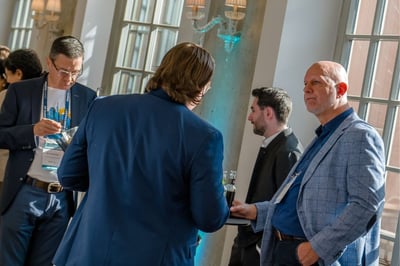
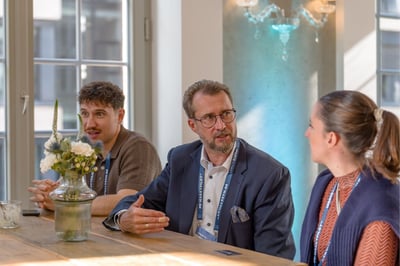
Pricing teams in machine manufacturing are often small, and many pricing leaders have no direct counterpart in their own company. That is much of the reason people come to PARTS SUMMIT. Attendees from very different sectors found the same questions on each other's desks: how to explain a price increase, how to hold discount discipline, how to keep parts available.
Much of the day happened away from the stage. Live MP ONE demonstrations ran at the coffee breaks, over lunch and into the evening reception. Our partners DQC and Signifikant hosted conversations at their stands, Signifikant with Swedish sweets for anyone who stopped by. Old colleagues met again by chance, and new contacts were swapped over coffee.


Leadership Is Built One Decision at a Time
The manufacturers that took part in the event are not waiting for markets to settle. They are building pricing logic that stands up to customer questions, giving sales teams the evidence to hold value in a negotiation, and checking their assumptions against data before the next budget round. None of it is a one-time project. Lisa-Maria Engert put it this way: "A new price list is not a pricing strategy."
That work continues long after the event, and it often starts with the pricing decisions that still rest on assumptions nobody has tested. Here is how to stay close to the conversation until the next PARTS SUMMIT.
Watch, Explore, Join Us
Register for PARTS SUMMIT 2027.
Frequently Asked Questions about PARTS SUMMIT