POSTER

A Brief Overview of Market-Based Pricing Strategy in Machine Manufacturing - Principle and Benefits

Read about the factors that play a role in pricing strategies and why intelligent price adjustments increase turnover and margins in after-sales.
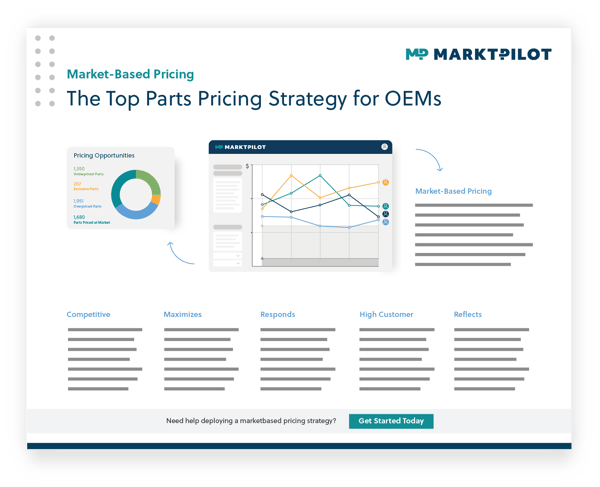
Poster The Top Parts Pricing Strategies
INCREASE SALES AND CUSTOMER SATISFACTION

How to Get More Out of Your Spare Parts Business

Test-Sheet (5)

Market Transparency

What are the spare parts worth on the market?

Test-Sheet

Dynamic Market

When does it make sense to increase prices?

Test-Sheet (1)

Market Share

What role does pricing play with your competitors?

Test-Sheet (2)-1

Profitability and Customer Service

How does market-based pricing affect sales and customer satisfaction?
LONG TERM SUCCESS

Create a Basis for Market-Based Spare Parts Pricing and Increase Turnover and Profit in After-Sales

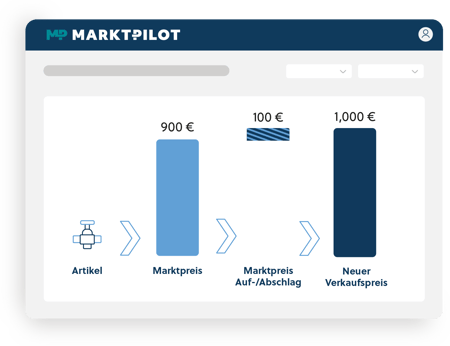
This document explains the principle and benefits of market-based pricing and its effects on profitability and customer loyalty. It uses a graph to show the current relationship between market-based pricing and spare parts, with the potential for price increases. Currently, only around four percent of all standardized purchased parts are affected by market-based pricing, including semi and exclusive pricing.

Marktorientiertes Ersatzteil-Pricing Beispiel
Market-based spare parts pricing with our PRICERADAR and PRICEGUIDE solutions
TARGET GROUP

These Companies Benefit

The document is primarily aimed at managers and those responsible in the after-sales area of machine manufacturers (OEMs) with an annual turnover of more than five million euros in the spare parts business.

This primarily concerns companies in Germany, Austria, and Switzerland (D-A-CH). A dynamic pricing strategy is essential for the sub-sectors of machine manufacturing, where hundreds of dealers often compete for market share in the spare parts business.

How MARKT-PILOT Optimizes Spare Parts Pricing

Static pricing and manual adjustments leave margins and customer trust at risk. MARKT-PILOT helps industrial manufacturers price spare parts smarter, faster, and in line with the market.

At the heart of this approach is MP ONE, the unified Pricing Performance platform. It combines real-time competitor prices, delivery times, and market intelligence with guided decision-making and continuous performance tracking.

With MP ONE, manufacturers can:

  • Price thousands of spare parts with confidence
  • Identify margin risks and opportunities early
  • Reduce manual work and simulate revenue impact
  • Continuously measure and optimize pricing performance

The result: smarter spare parts pricing, protected margins, and sustainable aftermarket growth.

PRICERADAR Automated Market Price Research for Spare Parts
WHAT OTHERS HAVE TO SAY

Discover Why We're Your Perfect Choice

"We aimed to increase incoming orders by €1.2 million to €7.6 million within two years. After just seven months, we recorded an increase in turnover of 28%, largely thanks to the software and the MARKT-PILOT team. We saw our average profit increase was just under 20%."

FAQ

What Else You Should Know

What does a market-based, dynamic pricing strategy mean for machine manufacturing?

Market-based pricing is based on current market data and therefore requires access to up-to-date information about the price of a spare part, its availability, and delivery time.

With the data on which market-based pricing is based, companies can set their prices above, below, or at market level and pursue profit increases or other goals. Validated market information therefore forms the basis for pricing that is competitive and at the same time increases sales and profits.

What are the prerequisites for a market-based pricing strategy for spare parts?

The data required for market-based pricing must be precise and up-to-date and include all competitors in the respective market. Manual data retrieval and monitoring are not enough to create this data basis for a market-based pricing approach.

To illustrate: with more than 50,000 OEMs worldwide selling over five million spare parts and more than 2,000 suppliers (online platforms/dealers, stationary dealers) within a country, manual market price research is not feasible.

What role does pricing software play in the dynamic pricing of spare parts?

An intelligent, digital solution can fully automate the collection of market data. With this approach, machine manufacturing companies can focus on sectors that are important to them and quickly collect online and offline market data.

Companies' knowledge of current market prices is always up-to-date, complete, and accurate. In addition, the manual and personnel effort is reduced. As a result, intelligent pricing software frees up resources that can then be better utilised for the implementation of new market information.

Why are pricing software beneficial for machine manufacturers?

According to the latest survey, only 4% of all purchased spare parts are priced in line with the market. This discrepancy is primarily due to a lack of market data, as many machine and OEM manufacturers still rely on Excel spreadsheets or outdated tools, lacking modern analytical capabilities.

Furthermore, competition from component manufacturers, online and offline dealers, and various platforms adds pressure on machine manufacturers and OEMs regarding spare parts pricing. End customers can easily turn to these alternative channels for their spare parts needs. However, this scenario changes significantly with the use of modern pricing software, especially those based on artificial intelligence (AI) methods.

Are you interested in learning more? Book a demo with a member of our team!