
Digitalization is reshaping machine manufacturing, challenging traditional after-sales services with inefficiencies and rising customer expectations. As competitors embrace digital solutions to cut costs and boost loyalty, AI emerges as a game-changer for transformation. Use our whitepaper to unlock AI’s potential and create a clear action plan for success.
What is Digitalization in Machine Manufacturing?
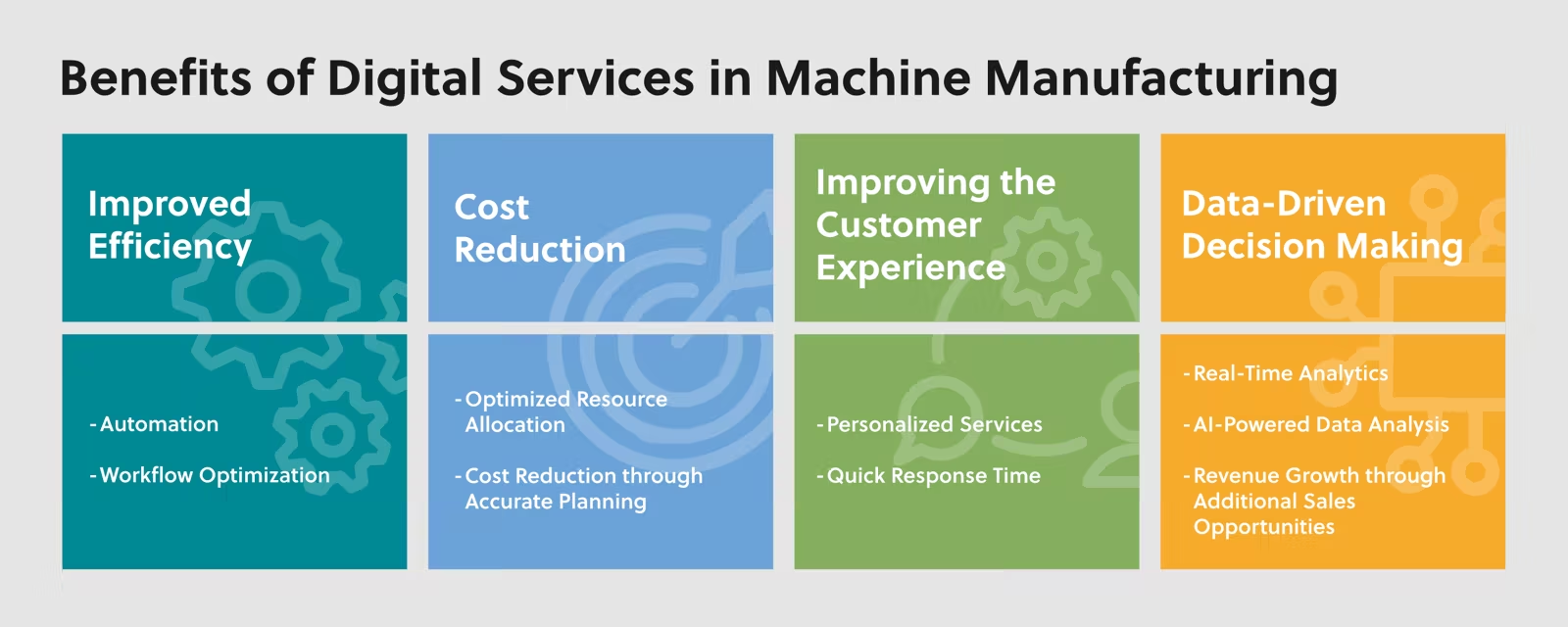
Digitalization in machine manufacturing involves using modern technologies to automate processes, utilize data more efficiently, and sustainably improve the value creation process. From development and production to maintenance and optimization of machines, digitalization offers immense potential. Connected machines, artificial intelligence (AI), and big data enable the real-time collection and analysis of operational data. This helps companies make informed decisions, minimize downtime, and increase productivity. Additionally, increased efficiency in work processes can relieve employees and help companies cope with the ongoing shortage of skilled workers.
The central aspect of digital transformation in machine manufacturing is the establishment of connected ecosystems, such as those using IoT technology, where machines, employees, and processes can seamlessly interact. This not only leads to increased efficiency in production but also offers new opportunities for improving customer satisfaction.
Traditional aftermarket services are now reaching their limits. Manual processes, for example, lead to long response times for service requests. A more significant problem is the frequent lack of centralized data sources, making accurate fault diagnosis and quick resolution challenging. Additionally, maintenance costs are high due to unplanned outages, which often require expensive, short-term interventions. Another issue is the lack of integration between customer and machine data, hindering data-driven analysis and predictive maintenance efforts. Smart tools, such as digital twins or IoT sensors, can proactively detect problems and automatically initiate maintenance actions.
Digital Trends and Innovations in Machine Manufacturing
AI is revolutionizing machine manufacturing by automating complex decision-making processes. Algorithms analyze vast amounts of data in real time to predict machine failure probabilities and optimize maintenance schedules. Additionally, AI is also utilized to automate customer service interactions and enhance cross-selling strategies.
With the help of AI and real-time data, the pricing of spare parts can be market-appropriately adjusted. Factors such as demand, urgency, and availability are incorporated into the price calculation. This allows companies to optimize their margins while offering customers a fair deal. For example, prices could be lowered to boost sales when availability is high, while higher prices could be applied when stock is limited.
Internet of Things (IoT) facilitates the real-time monitoring of machines and devices, greatly improving predictive maintenance. Sensors embedded in machines continuously transmit condition data, detecting anomalies before a breakdown occurs. This proactive approach allows businesses to schedule maintenance in advance, reduce downtime, and extend the operational lifespan of their equipment.
Customers increasingly expect personalized, instantly available solutions. Patience for lengthy service and delivery times is diminishing. Companies must adapt to these trends to meet customer needs efficiently and in real time. This includes personalized recommendations provided through AI-generated analyses, as well as seamless, cross-channel communication with the customer. Automated processes here create opportunities for employees to engage more directly with customers. Personal interaction, combined with a modern and personalized service offering, is the key to a successful parts business.