
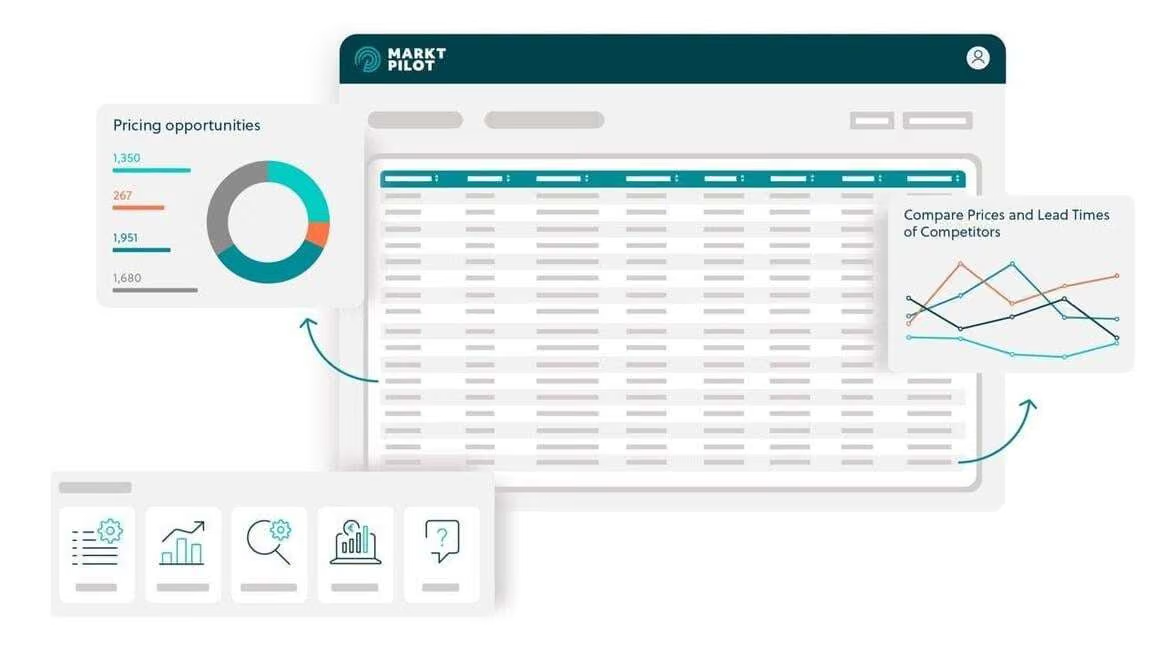
Competitive pricing means setting your prices based on your competition. It’s essential for staying profitable in a busy market. By setting competitive or market-based prices, you can attract more customers and adapt quickly to market changes. Want to learn how? Read our Ultimate Guide for Market-Based Pricing!
💡 Competitive pricing involves setting product prices based on market data and competitors’ pricing to maximize profitability and respond to market dynamics.
💡 Companies can adopt three main strategies: lower pricing, higher pricing, or matched pricing, where they offer the same price as their competitors, each with unique advantages and challenges.
💡 Implementing effective competitive pricing requires continuous market analysis, using advanced technology such as AI-supported pricing software for real-time adjustments.
Competitive pricing definition: A competitive pricing strategy, often also referred to as market-based pricing, involves setting the prices of products by taking into account competitors’ pricing instead of solely relying on production costs. For companies looking to maintain relevance and heighten their profit gains in an ever-evolving marketplace, this tactic is essential. By adjusting prices to be consistent with what’s happening in the market, producers can make certain that their portfolio continues to attract buyers even when faced with numerous alternatives. A strategy grounded in competition-based pricing gives business greater agility when it comes to adapting swiftly to changes within the market.
To effectively implement a competitive based pricing approach, companies must conduct comprehensive analysis of market trends and establish strategic price points aligned with industry standards. This process requires effective market intelligence to identify major competitors, understanding their pricing structures, and continuously monitoring any shifts in their product rates. This enables businesses to determine the true market value of their product lineup and set prices accordingly for maximum market competitiveness and enhanced profit margins.
Adopting a competitive pricing strategy enables companies to align their prices with prevailing market rates, ensuring they remain competitive while strategically optimizing profit margins for better financial performance.
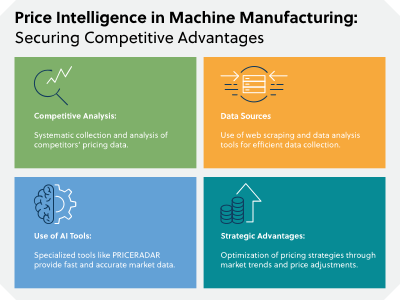
Competitive pricing strategies are essential for machine manufacturers aiming to stay relevant and profitable in a changing market. Manufacturers can adopt strategies such as lower pricing, higher pricing, or matched pricing, where they offer the same price as their competitors to avoid losing customers.
In addition to the three mentioned competitive pricing strategies which are focusing mainly on the competitive pricing aspect, market-based pricing plays a crucial role in determining product prices. A market-based pricing approach involves setting prices based on the current market conditions, including not only competitor prices but also supply and demand, customer preferences, and overall economic trends. This approach ensures that prices are aligned with what consumers are willing to pay and with the market, allowing businesses to benefit of the competitive pricing aspect while maximizing their profit potential.
Successful competitive pricing strategies as well as market-based pricing approaches are heavily dependent on comprehensive market intelligence to identify and analyze the prices established by competitors in the marketplace. It's absolutely essential for businesses to maintain access to up-to-date competitor pricing data, allowing pricing teams to make well-informed decisions that help maintain a strong competitive position in an increasingly data-driven market. By identifying strategic opportunities where price adjustments can be implemented, companies can effectively expand their market share while simultaneously increasing their overall competitiveness against third-party alternatives.
Adding dynamic pricing adjustments is a crucial element within these strategies, giving businesses the flexibility to change their prices based on shifting market demands and competitor responses. Understanding what customers want, prefer, and how they buy is essential for creating effective pricing approaches that match your target customer base.
By consistently adjusting to current market demand, companies can continually offer competitive prices that grab consumers' attention.
Main Competitive Pricing Strategies for Machine Manufacturers
Manufacturers often adopt one of three primary competitive pricing strategies to position themselves within the market by setting competitive prices.
These tactics play a crucial role in establishing an effective market positioning for businesses, particularly in the parts business of machine manufacturing.
Selecting a specific approach from these pricing strategies comes with its unique set of benefits and obstacles, which depends on different elements including the company’s target market, desired market positioning, and overarching business objectives.
Lower Price Strategy
Adopting competitive price strategies, particularly undercutting and penetration pricing, involves setting lower prices than competitors to attract consumers. These tactics are especially effective in capturing the attention of price-sensitive customers and achieving a rapid increase in market share, making them advantageous for newcomers in the industry. For instance, Amazon Essentials positions itself as one of the most budget-friendly options by offering low costs to its clientele. However, companies using such aggressive pricing strategies must plan to gradually increase their prices after the initial market entry phase with reduced rates to recover from diminished earnings.
Employing a strategy focused on offering spare parts at a lower cost can lead to increased sales figures and a larger market share, but it is not without risks. Continuously undercutting competitors’ prices could result in unsustainable pricing models and reduced profit margins over time. To avoid this outcome, machine manufacturers should conduct thorough price comparisons against their competition selling similar products at the same price. This analysis will provide insights into consumer preferences and price adjustments potentials to increase margins. So, competitive pricing analytics play a vital role.