
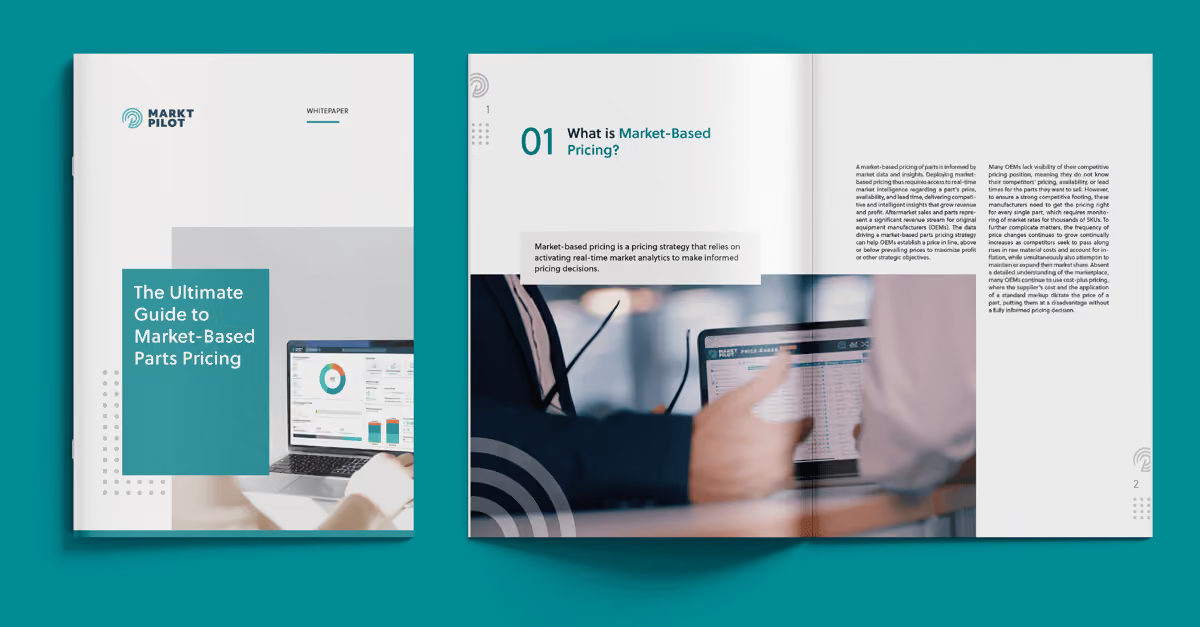
The Ultimate Guide to Market-Based Parts Pricing
Conventional pricing methods, such as cost-plus pricing, are no longer keeping pace with B2B marketplaces. Learn the benefits of market-based pricing and easy steps to implement a competitive pricing strategy.
What you'll get
What market-based pricing is
Why to implement it now
Which organizations profit most
What you need to get started
Why Market-Based Pricing?
Unveil the True Market Value of Your Parts Catalog
By evaluating prices of competitors or distributors, you will unveil the true market value of your product catalog and can adopt a competitive, market-based pricing strategy.
When monitoring competitive market prices, you are able to identify exclusive, overpriced, or underpriced products, then adapt your pricing strategy with data-driven recommendations to reflect each product's market value. As a result, you'll increase revenue, create higher margins, and increase customer engagement.
What's inside
- What is market-based pricing, and how it compares to cost-plus pricing
- The top 5 pricing strategies for spare parts at a glance
- Why market insights mean increasing opportunities for comparison
- How market-based pricing increases customer satisfaction
- The requirements: 360° data overview, digital data collection and intelligent market solutions
Who It's For
Which Organizations Can Profit from Market-Based Pricing?
Market-based pricing has the greatest effect on industries with distributed sales, where hundreds of dealers often compete for market share.
It has the most success and impact in machinery (packaging, agriculture, metal fabrication, mining, presses, cutting and chipping equipment) and equipment (construction, welding or machine equipment, crane or material handling).
Want the Numbers for Your Portfolio?
See where your prices are drifting, on your own parts data, in 30 minutes.