When it comes to industrial profitability, spare parts are often the quiet heavyweight. They may represent only a fraction of revenue, but they frequently account for a disproportionate share of profit, making pricing discipline one of the fastest ways to protect margin and unlock growth.
That was the core message of the joint webinar by MARKT-PILOT™ and Accenture: in a market shaped by rising transparency, volatile costs, and growing complexity, spare parts pricing can no longer rely on static rules or scattered manual processes.
Why Pricing Needs a Reset
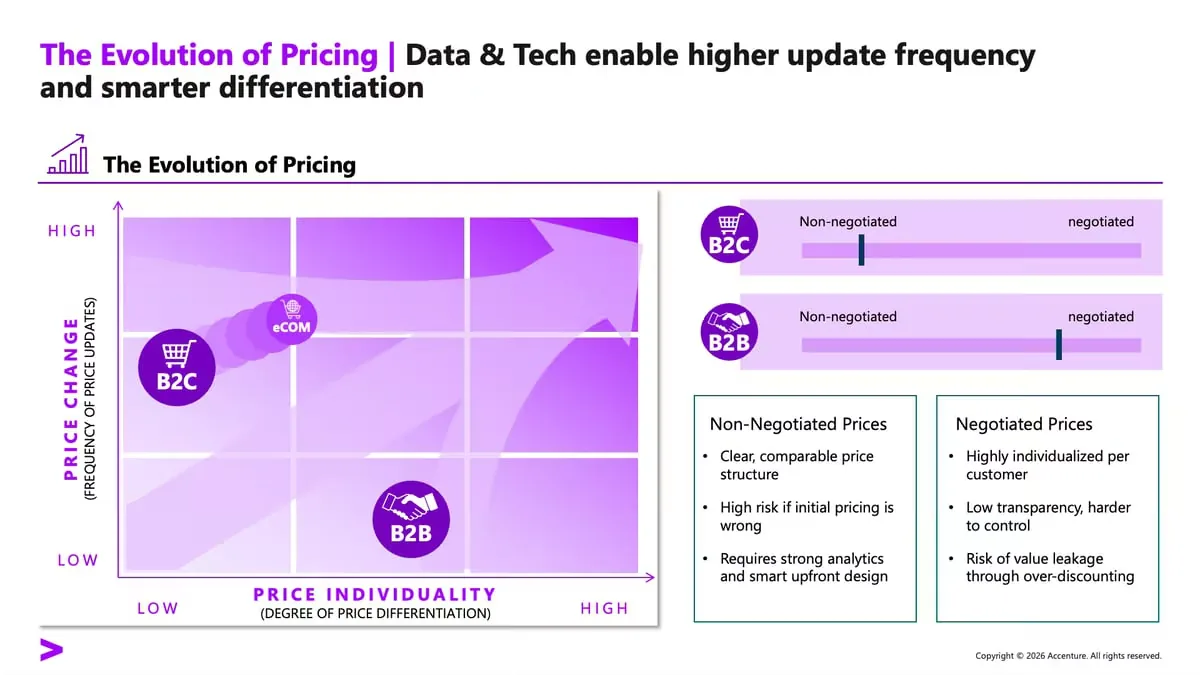
Daniel Lindner of Accenture challenged a common assumption: the issue is not that companies still rely on outdated pricing logic. In many cases, they have already implemented value-based approaches – but are now hitting their limits. The real opportunity lies in moving beyond static models toward AI-driven pricing systems that can continuously adapt to market dynamics.

The Pricing Body
A central theme of the session was Accenture’s “pricing body” model: pricing as a living system with sensors, brain, muscles, and heart. Good pricing starts with market and customer signals, translates those signals into decision logic, executes them through automation, and is ultimately governed by human ownership and accountability.
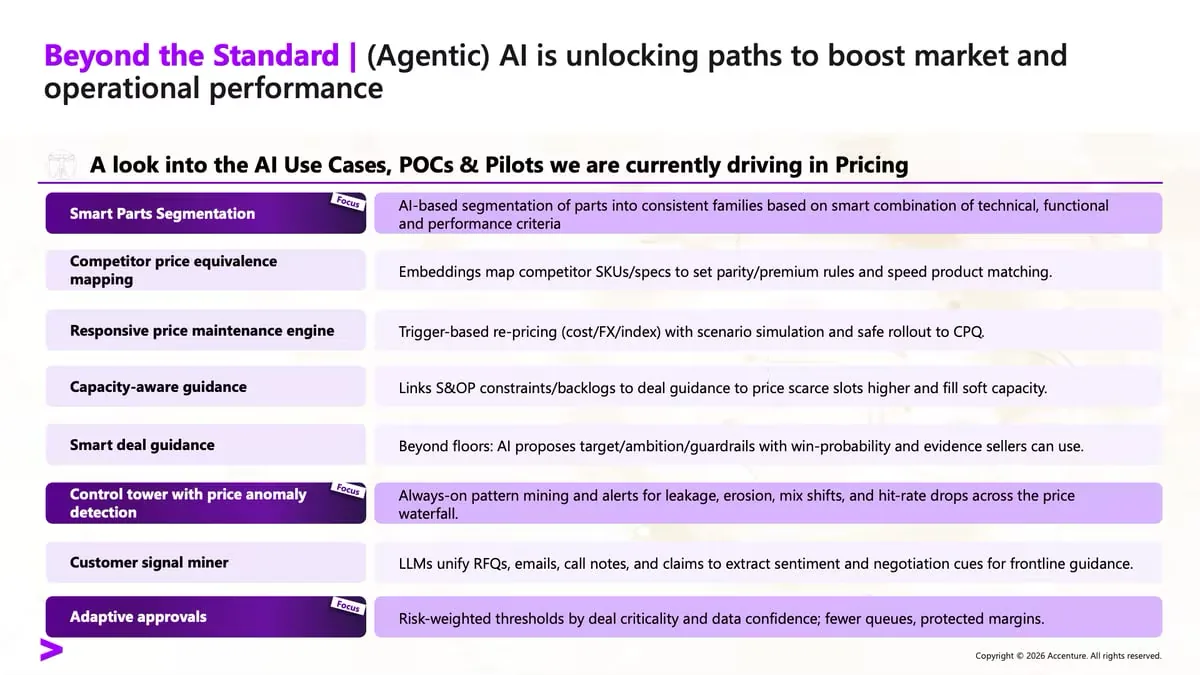
Daniel described the next step as moving from a static process to “a living and learning system,” where AI helps connect market signals, decision logic, execution, and feedback loops. Rather than replacing pricing teams, AI agents can handle targeted tasks such as competitor SKU matching, dynamic repricing, smart segmentation, control-tower monitoring, and adaptive approvals.
What Agentic AI Changes
The key takeaway was not “automate everything.” It was “automate the right thing for the right part.” Stefan Sandulescu, Senior Solutions Engineer at MARKT-PILOT, explained that parts should be treated differently depending on their value, criticality, and data availability, so that highly automatable parts can be handled efficiently while critical parts still receive advanced, value-based treatment.
As Sandulescu summed it up, “We don’t have one price. We have 10,000 micro-prices, each with a specific context.”
From Price Setting to Price Control
Another important insight was that Pricing Performance does not end once a price is published. The webinar emphasized the need for a control tower that monitors price realization across the gross-to-net waterfall, spots leakage, and recommends action where it matters most. Instead of fixed thresholds for every deal, the webinar argued for adaptive approval ranges based on risk, pattern clarity, and price sensitivity. Dynamic pricing in B2B is less about changing prices every day and more about changing the right level of commercial freedom.
What This Means for Industrial Manufacturers
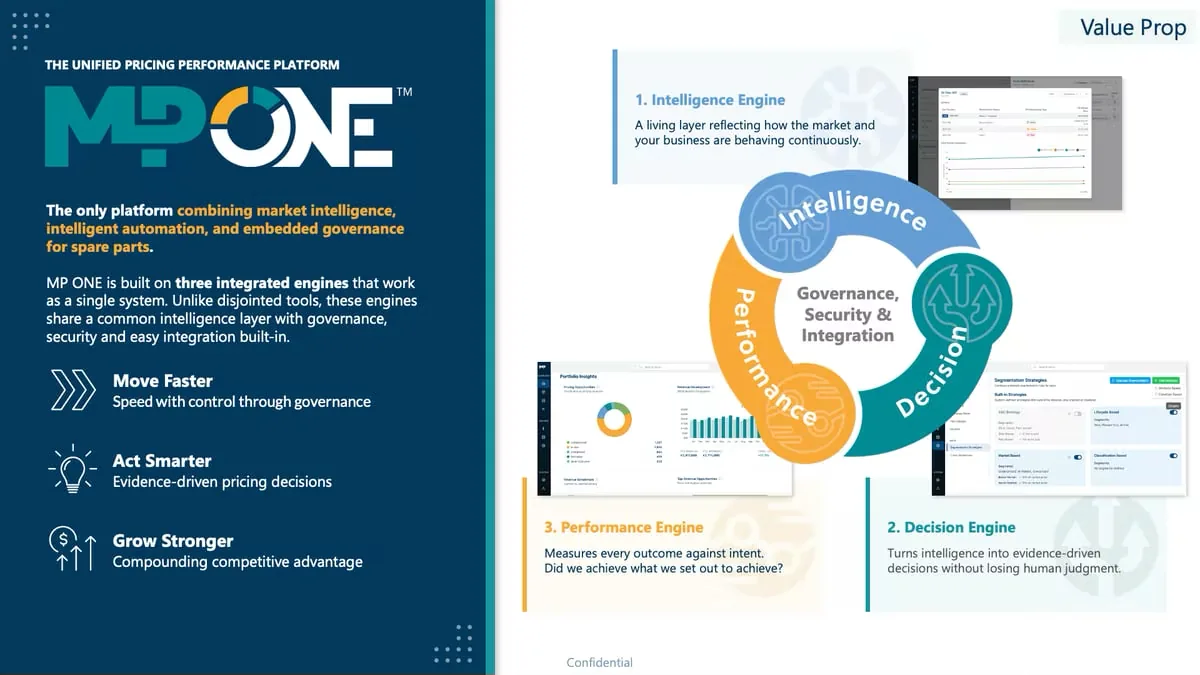
The practical message for manufacturers was straightforward: spare parts pricing can become more responsive, more transparent, and more defensible without requiring a massive transformation program first. MARKT-PILOT’s MP ONE™ platform combines market intelligence, decision logic, and performance control in one system, helping teams review prices faster, act with confidence, and improve financial outcomes over time. Pricing should become a system that senses, thinks, acts, and evolves.
Is Your Price List Drifting?
See where it's happening in your own portfolio.

MARKT-PILOT
Pricing Performance for Machine Manufacturers