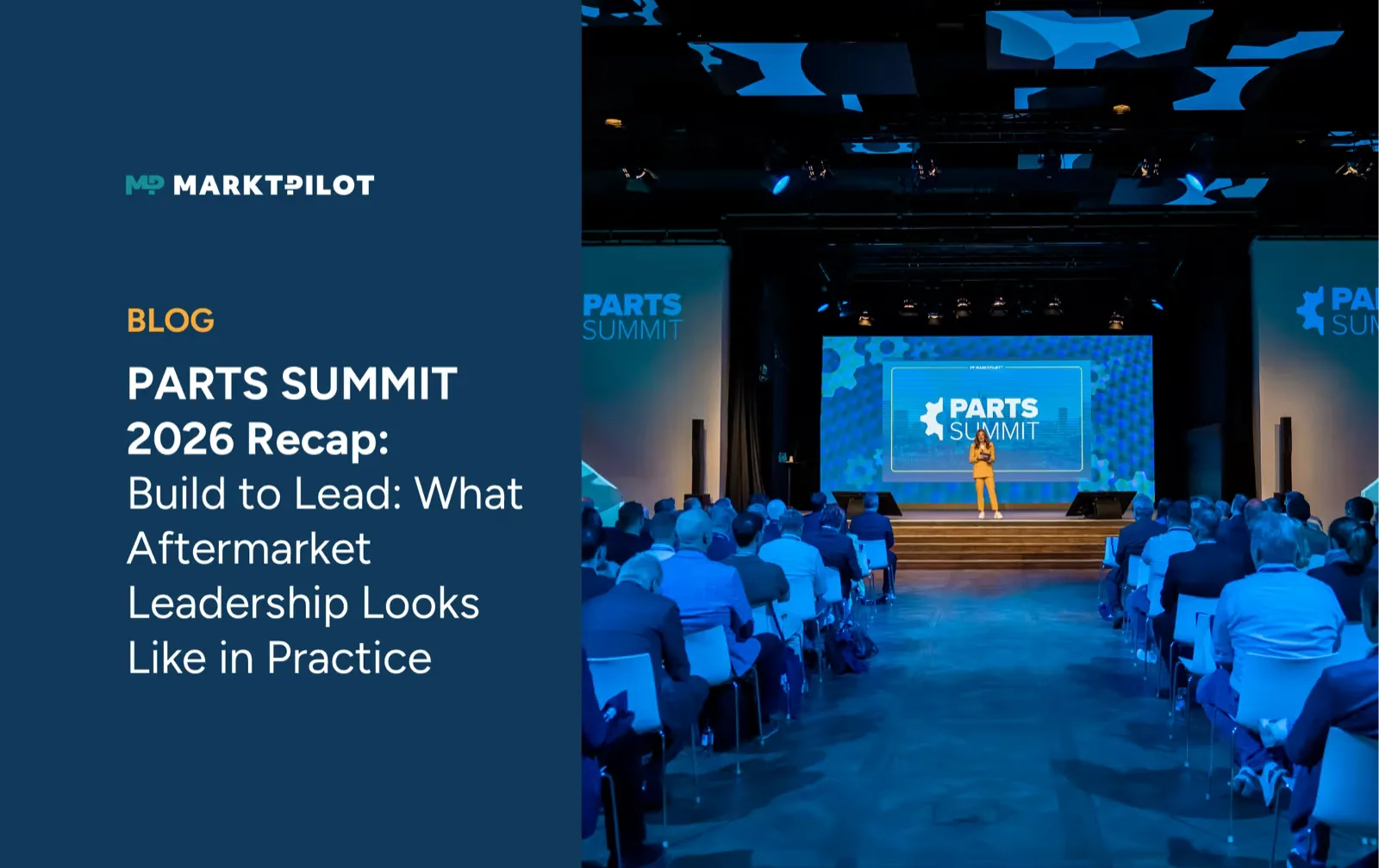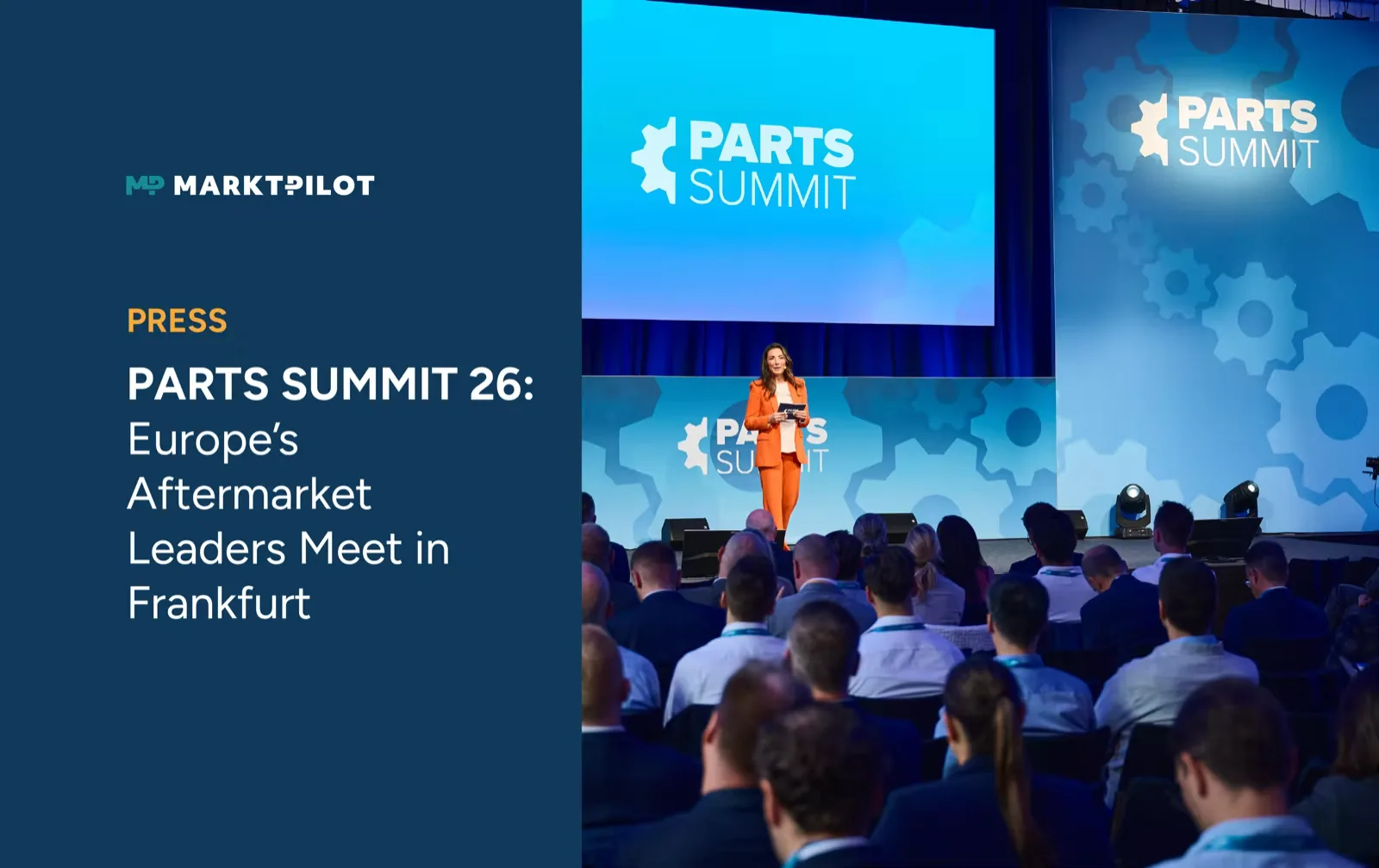
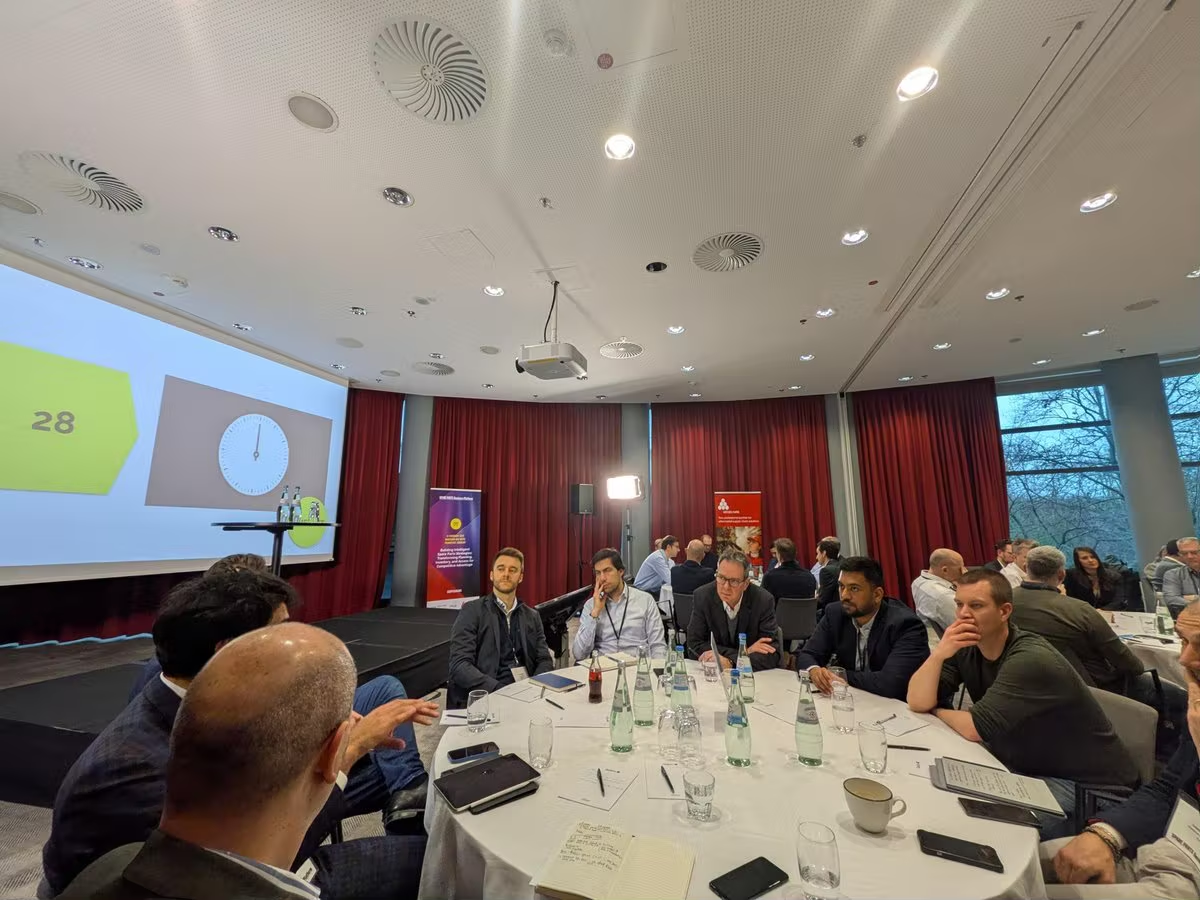
The Spare Parts Business Platform 2026 – The Power of 50, hosted by Copperberg, brought together industry leaders to discuss the future of the spare parts business. Across keynotes and roundtables, one message stood out: the spare parts business is becoming more transparent, more data-driven and more strategically managed than ever before.
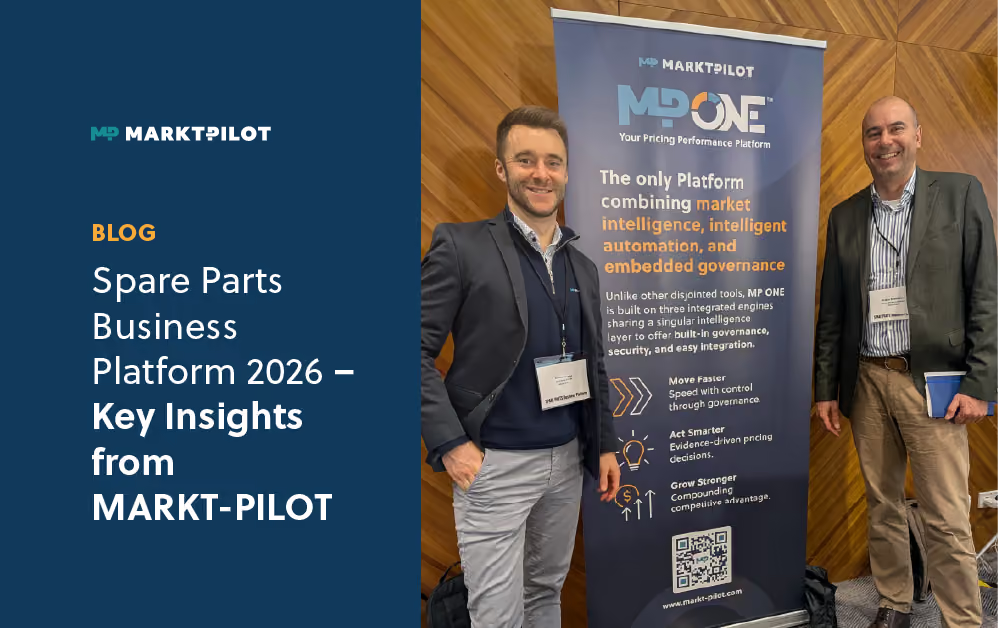
For us at MARKT-PILOT, the event was especially valuable as we had the opportunity to actively contribute to the discussions. Our colleagues Stefan Sandulescu, Senior Solutions Engineer, and Steven Kugler, VP Sales Europe, hosted roundtable sessions where participants shared practical experiences and challenges around the spare parts business.
From Reactive Spare Parts Sales to Proactive Lifecycle Services
A recurring theme across the event was the transition away from reactive spare parts sales. In his keynote, Ioannis Chatzilamprou (Metso) illustrated how simplifying spare parts portfolios and focusing on lifecycle solutions can dramatically improve performance. Similarly, Marco Mambretti (Cavotec) highlighted how companies are moving from passive RFQ-driven spare parts sales toward proactive service models supported by forecasting, installed base intelligence, and service kits.
This shift reflects a broader industry trend: spare parts are no longer simply replacement components, they are part of a holistic lifecycle value proposition.
Pricing Under Pressure: Transparency and Market Intelligence
Digital procurement platforms, online marketplaces, and global sourcing are rapidly increasing transparency in what was historically a relatively opaque aftermarket. Philipp Schmitz (Fastems) described in his keynote how the traditional OEM advantage of limited transparency is gradually disappearing.
As a result, manufacturers can no longer rely on historical markups or static price lists. Instead, companies need reliable market intelligence and systematic benchmarking to understand where their spare parts prices stand in the market. This observation strongly aligns with our findings from the MARKT-PILOT Global Parts & Service Report, which highlights increasing price competition and the rise of alternative suppliers as major challenges for OEM spare parts businesses.
Managing Spare Parts Complexity
Spare parts systems are inherently complex: thousands of SKUs, long lifecycles, intermittent demand patterns, and global supply chains. Dmitry Shurmin (Orchestrated Intelligence) explained how organizations are beginning to manage this complexity using digital twins, system simulations, and AI-based decision intelligence. However, the roundtables made it clear that technology alone is not enough. Organizational alignment, data quality, and governance remain critical success factors.
Speed and Customer Experience as the New Competitive Advantage
Customers increasingly expect spare parts procurement to resemble modern e-commerce: fast availability checks, transparent pricing, and reliable delivery. In this new environment, speed and service quality often outweigh price alone.
Our Takeaway at MARKT-PILOT
The companies that will succeed in this environment are those that combine:
- Market intelligence and competitive benchmarking
- Systematic pricing management across large portfolios
- Data-driven decision making
- Strong lifecycle and service offerings
- Fast and reliable customer experiences
In short, the spare parts business is evolving from an operational necessity into a strategic growth engine for machine manufacturers. With MP ONE, our unified Pricing Performance Platform, pricing teams gain continuous market visibility and can benchmark their prices against real market data.
A big thank you to Copperberg for organizing such a valuable event and bringing together a strong community of experts and practitioners.
Is Your Price List Drifting?
See where it's happening in your own portfolio.

MARKT-PILOT
Pricing Performance for Machine Manufacturers